

English Department
An Education in Imaginative Reasoning
The Baylor English department is a diverse community of faculty, staff, undergraduate students, and graduate students who share a love for language. We’re interested in what language can tell us about who we are as people and how it can help us be agents of good in the world. We divide our research and courses into three main categories: Literature, Linguistics, and Professional Writing and Rhetoric. Enjoy learning more about us from our website!
Undergraduate
Literature, Linguistics, and Professional Writing and Rhetoric
We love our English undergraduates! We offer majors in English Literature, Linguistics, or Professional Writing and Rhetoric. We also offer a minor in Creative Writing. Our students work with top scholars in their fields and benefit from small, discussion-oriented classes. They also enjoy opportunities to test out possible careers, whether through internships or as staff members of The Phoenix, the department’s student-run magazine.
Graduate
Why Study English?
We’re proud of our Ph.D. completion percentage and job placement rate and have been ranked best in the nation for Student Support and Outcomes by the National Research Council. Our graduate faculty offer the M.A. and Ph.D. in literary criticism as well as a certificate in literature and religion. Our graduates are both generalists who can teach a range of courses and specialists with significant books and articles.
Recent Faculty Publications
All Publications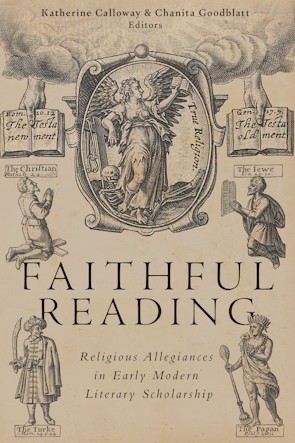
Faithful Reading: Religious Allegiances in Early Modern Literary Scholarship explores how the religious identities and critical work of literary scholars reciprocally shape each other. The past hundred years of literary scholarship have seen a vigorous correction of the idea that academic study is objective and conducted in a preconception-free vacuum. Despite this climate of increased self-awareness and honesty, scholars are often quite reserved about their own religious or irreligious beliefs and backgrounds. Faithful Reading discusses how these shape which texts scholars choose to study, the questions they ask about them, and the kinds of experientially informed answers they can provide. Contributors include early-career to senior scholars with a variety of religious (Catholic, Jewish, Protestant) and non-religious (secular) allegiances. They consider how these allegiances inform their scholarship on various genres. These include biblical texts (Canticles/Song of Songs; Book of Ruth) and religious prose by Richard Baxter, John Donne, and John Selden. They also include drama and poetry of the period, for example by Aphra Behn, Elizabeth Cary, Richard Crashaw, George Herbert, John Milton, and William Shakespeare. They ask such questions as:- Do particular early modern authors and works attract scholars of certain religions? Which ones, and why? - How do scholars of Jewish backgrounds respond to the Christianization of the Hebrew Bible and its politicization in the Reformation, as well as to emphatically religious early modern texts? - How do scholars bring their denominational identities to bear on the works of their anglophone Christian forerunners? and - How should a religiously diverse community of scholars converse with each other, both in and out of print, about the literary texts we study?
Faithful Reading - Baylor University Press

A study of the racist mythologies employed in science, religion, law, and culture by white Americans to justify slavery, Jim Crow, and segregation.
https://global.oup.com/academic/product/white-lies-9780197652183

This compelling collection of fourteen essays explores the enduring theme of exile in Shakespeare’s works and their global afterlives, offering a timely and thought-provoking response to the modern age of displacement. Building on Edward Said’s observation that exile today is marked by its unprecedented scale—driven by war, imperialism, totalitarianism, climate change, and systemic injustice—this volume traces the ideological and cultural forces that shape experiences of exile across time and geography.
Shakespeare’s plays, deeply haunted by exile in its many guises—political, religious, cultural, and gendered—serve as a rich site for interrogating identity, belonging, and otherness.
What Country, Friends, Is This?” Shakespeare and the Staging of Exile

Brings together two conversations in rhetoric and writing studies that have rarely been examined together: how writers transfer knowledge across context and how they compose across modes and media. Extending earlier work connecting multimodality to writing, this collection explores how writing transfer works across of range of multimodal composing contexts, including undergraduate and graduate courses, writing centers, and public writing.
University Press of Colorado - Multimodal Composing and Writing Transfer

Too often, when women in literary texts come of age, they die. Instead of entering an adulthood full of possibility, female characters time and again follow the path charted by Ophelia and drown, either literally in waters they cannot navigate or metaphorically in a society that does not allow them to construct their own stories.
Eudora Welty, however, rewrites this standard female coming-of-age story by repeating a specific key scene. More than a dozen times in her narratives, a young woman encounters a body of water—a lake, a river, a whirlpool, or even a rain barrel. In every case, the character’s submersion signals her entry into an adulthood full of possible danger. When the submersion experience becomes a spiritual baptism, however, the enchanted natural world can empower female characters to counter human social structures that tend to leave them silent, ignored, or dead.
Of Women and Water | University Press of Mississippi

The early twenty-first century has seen a sharp rise in Black US poets employing the mask of persona, often including and interrogating archival materials as they do so. While some have observed this rise and noted its connection to historical figures, Ryan Sharp explores it more deeply, as a project-based historical and poetic practice. Sharp examines its sustained use of historical persona and capacity for conjuring Black speakers as a countermeasure against the archival silencing and misrepresentation of Black voices and histories—a tactic he theorizes as poetic fabulation—through the poetry of Elizabeth Alexander, Cornelius Eady, Adrian Matejka, Patricia Smith, Natasha Trethewey, and Frank X Walker. This poetic practice is not only about looking back but about critically and creatively (re)imagining the past to expand the possibilities for Black presents and futures.
Through his argument, Sharp demonstrates how the unique aesthetic and rhetorical license afforded to poetry, along with the interiority of persona, empowers such historically minded projects to be concurrently invested in the curation of Black narratives and identities.
https://uncpress.org/9781469680637/another-throat/
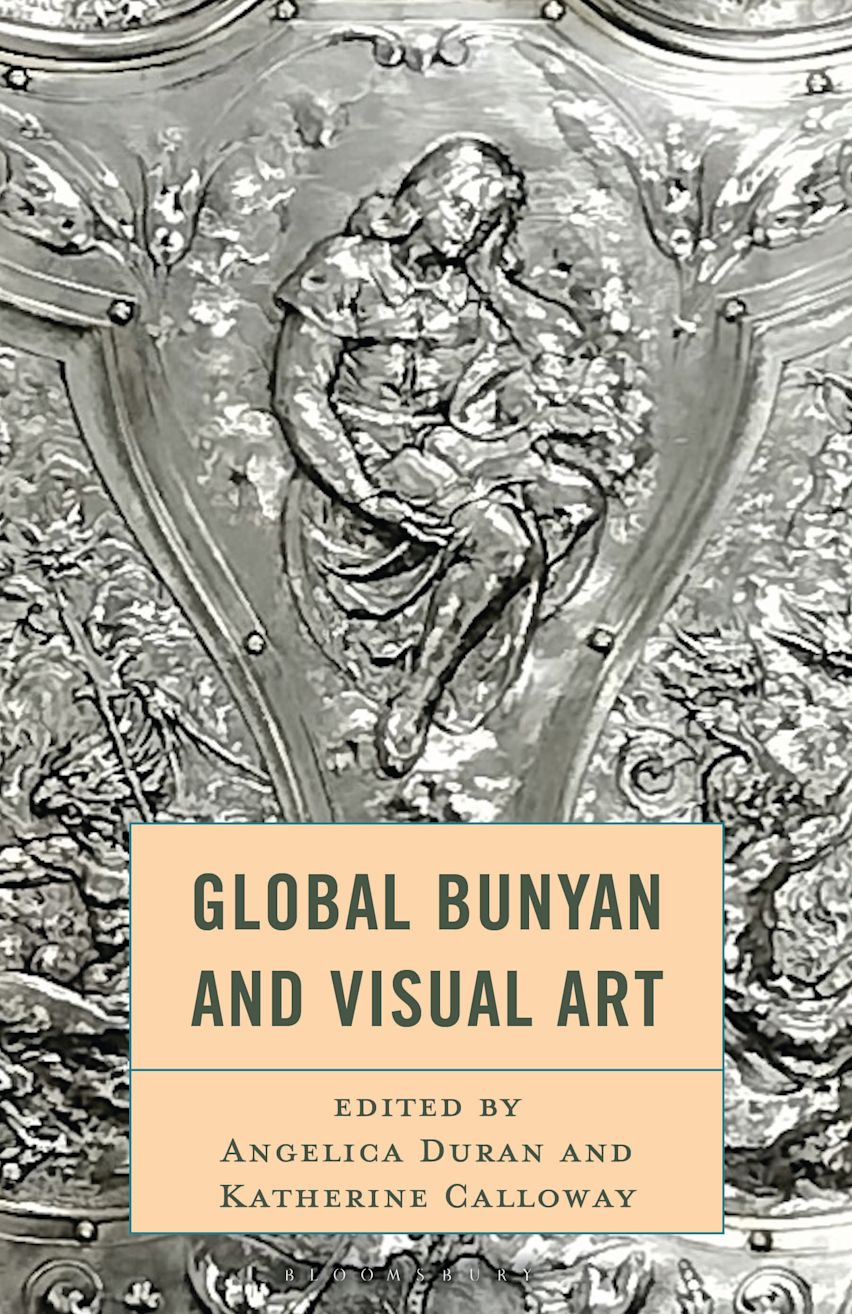
This book advances the conversation about the presence, aesthetic appropriation, and re-interpretation of the foundational English author John Bunyan (1628–1688), whose works and legend have had a vibrant afterlife in visual art.
Focusing on the global reach of Bunyan's works and legend through multiple media and cultural adaptations provides a unique opportunity to discover the varied and generative influence of Bunyan on cultures past and present, promoting a more diverse appreciation of Bunyan's unparalleled reach. The contributors also foster opportunities to discuss the role of intermediality in contemporary re-appropriations of early modern literature in the context of globalization, as well as a critical exploration of Bunyanic presence in global contemporary art via intertextual and intermedial relations.
Global Bunyan and Visual Art: : Angelica Duran: Bloomsbury Academic - Bloomsbury

Introducing their Positive Language Education framework, the authors expertly outline the theoretical background for integrating linguistic objectives with a wide range of holistic 21st century competencies including emotional regulation, well-being, ecoliteracy, and global citizenship.

This book contributes to a sparsely studied but significant entanglement: the ways in which Shakespeare informs Latinx artistic and cultural production and Latinx young adult literature informs Shakespeare. The book demonstrates how Shakespeare is repurposed by Latinx writers of young adult literature to critique oppressive social and educational structure and, from that, to imagine more socially just and culturally sustaining futures.
https://link.springer.com/book/10.1007/978-3-031-63010-1
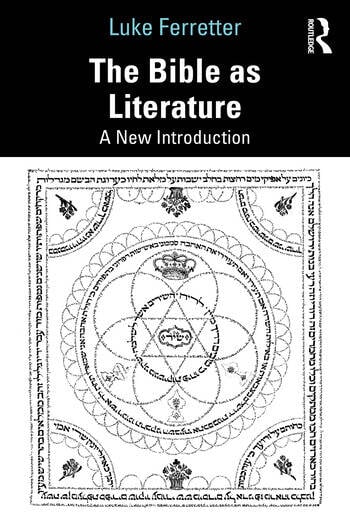
This book introduces the Bible as one of the greatest works of world literature. Luke Ferretter provides a comprehensive history of the field, alongside detailed readings of the texts of the Bible and the most influential theories in the area.
Routledge - 2025
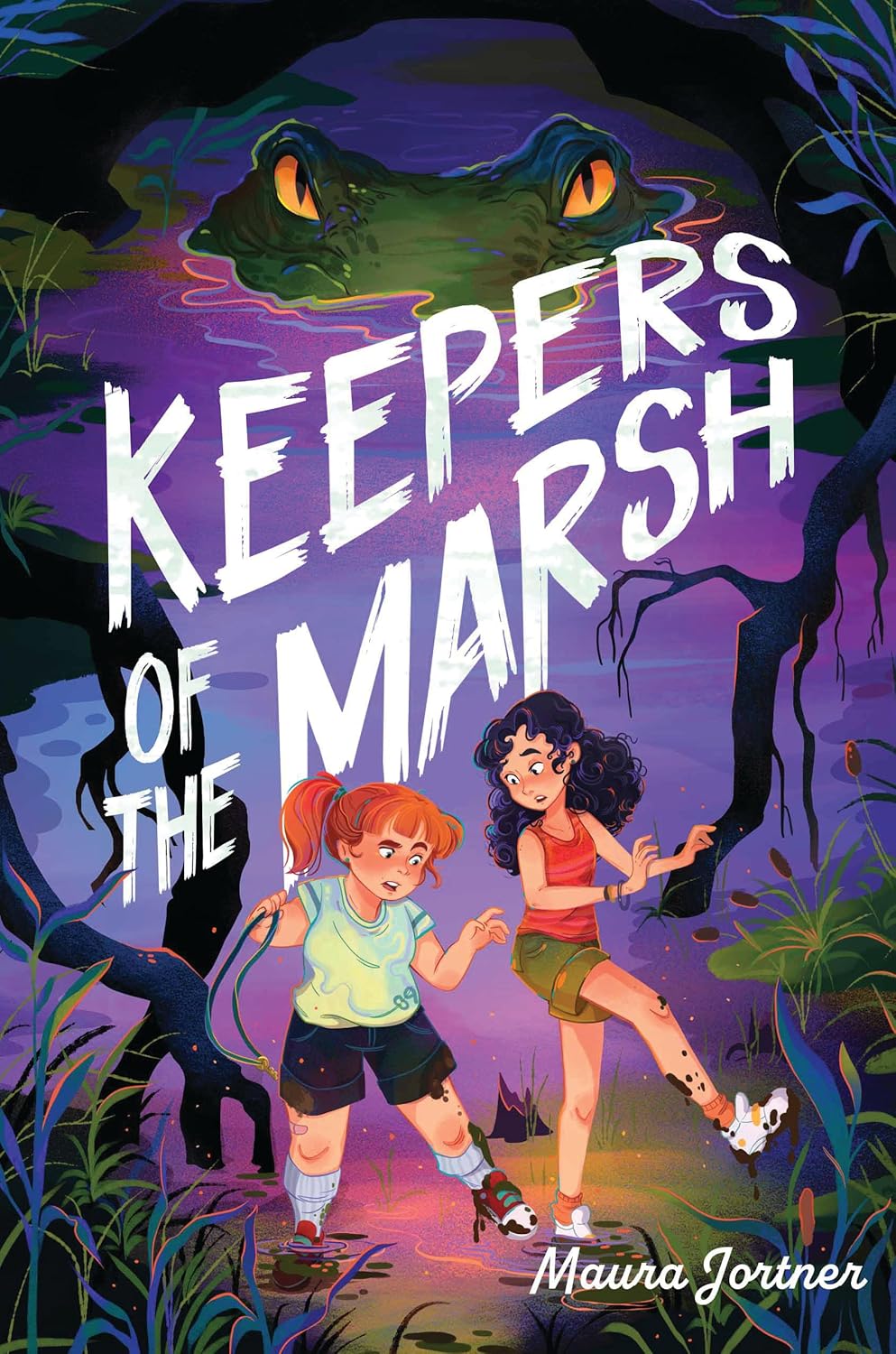
Twin sisters team up—despite drastically different personalities—to save their family from a bitter witch’s curse in this rich and atmospheric middle grade novel. Holiday House - May 2025
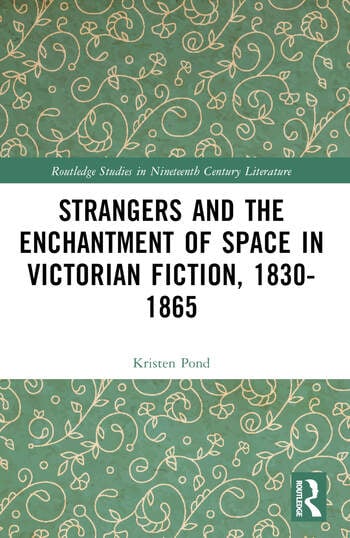
Tracing the origins of how we think about strangers to the Victorian period, Strangers and the Enchantment of Space in Victorian Fiction, 1830– 1865 explores the vital role strangers had in shaping social relations during the cultural transformations of the Industrial Revolution, transportation technologies, and globalization. Routledge - Jan 2025
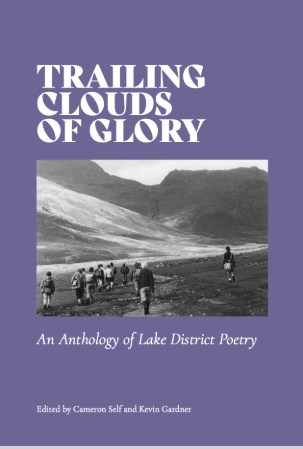
An anthology of Lake District poetry.
Waterland Books Jan 2025